How thick should the bechamel be for a pie filling?
Reviewers described Oven Marvel's sauce as medium-thick and slow to flow. Here is how to hit that consistency on purpose, and why it matters more under puff pastry than under shortcrust.
Quick answer
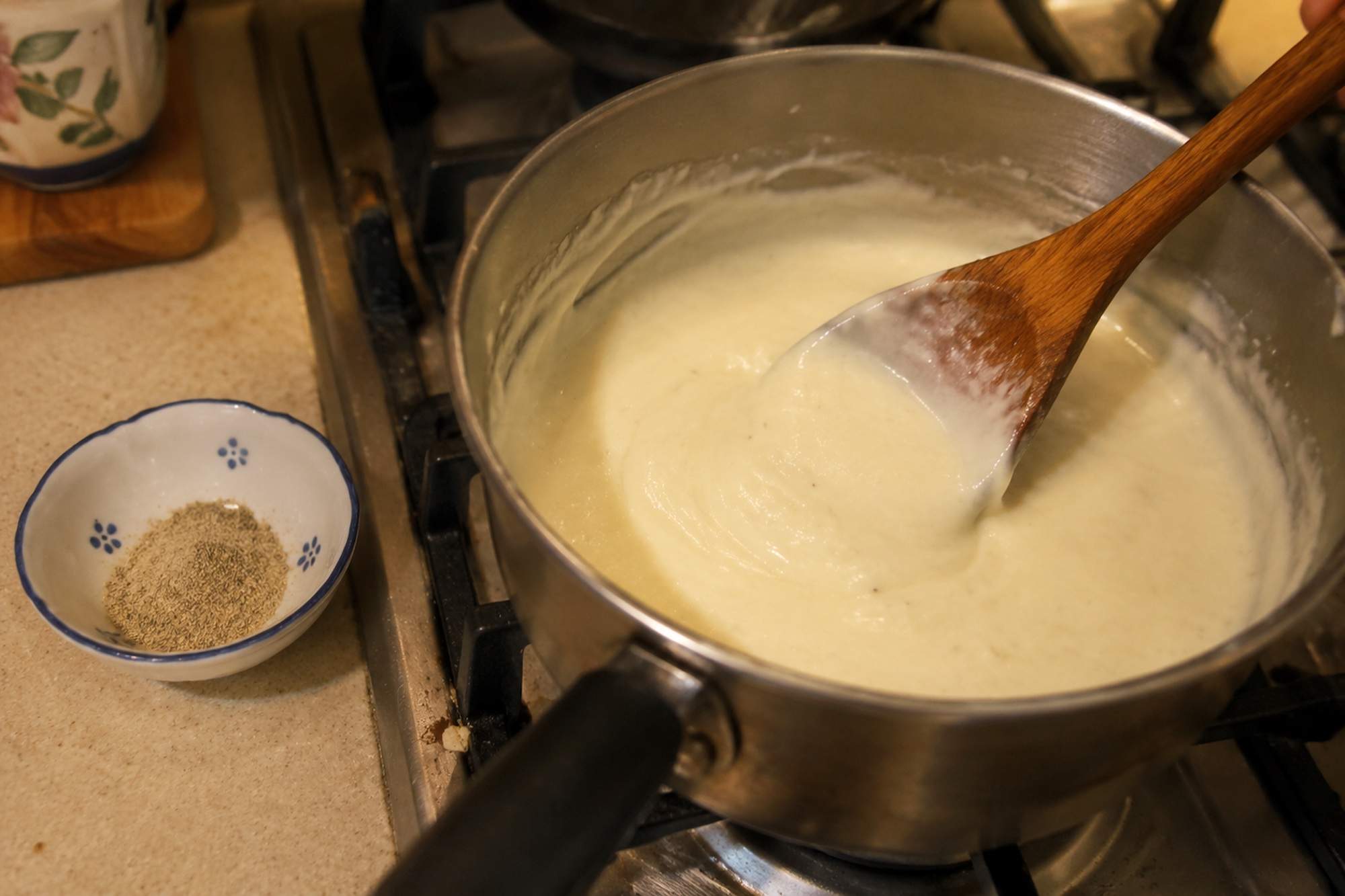
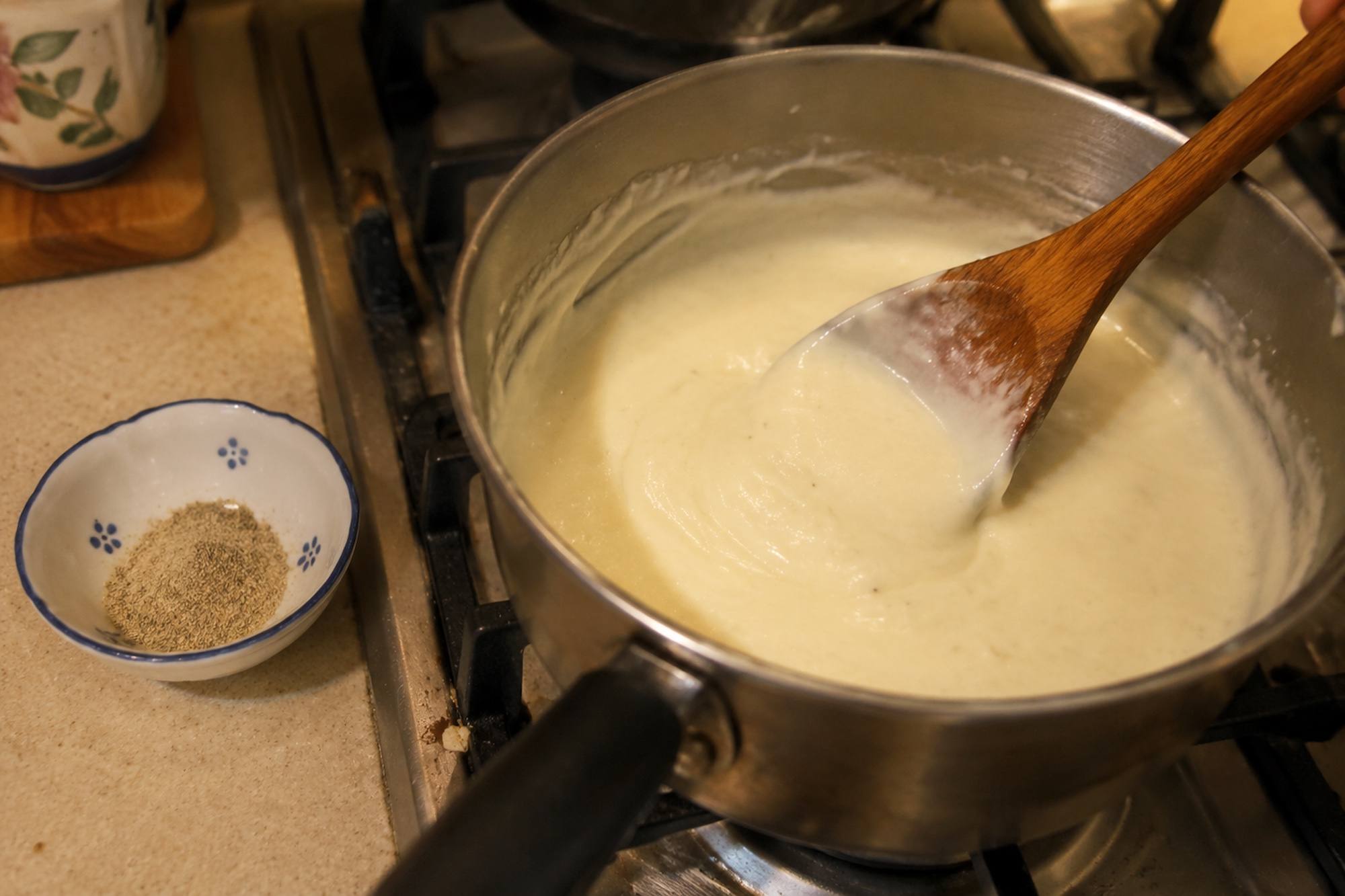
For a flat puff pastry chicken pie, make a medium-thick bechamel of about 35 g butter and 35 g flour per 300 ml of liquid. It should coat a spoon thickly and hold a clear line when you draw a finger through it. It thickens further as it cools, and it must be completely cold before it meets the pastry.
What thickness was the Oven Marvel sauce?
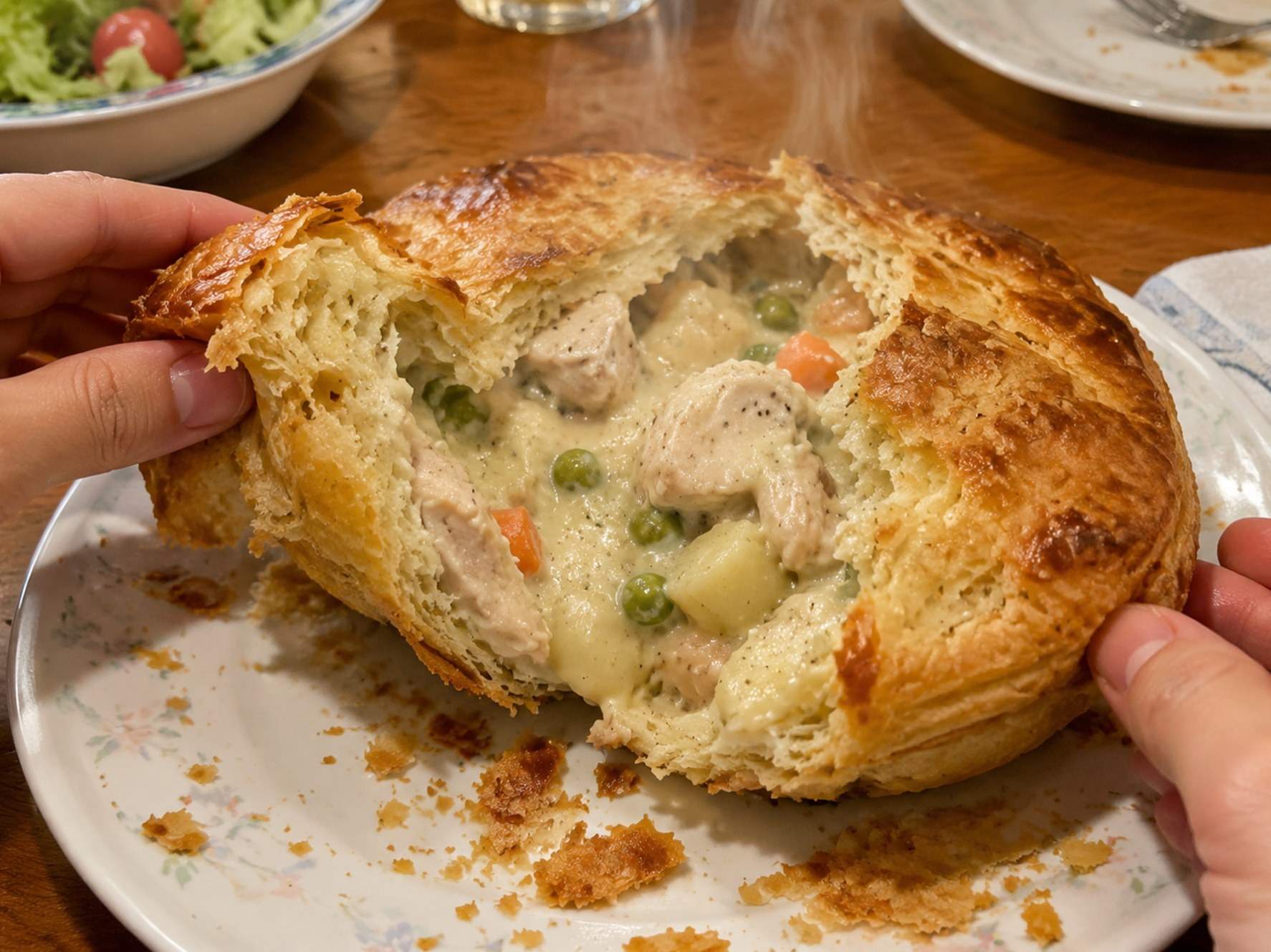
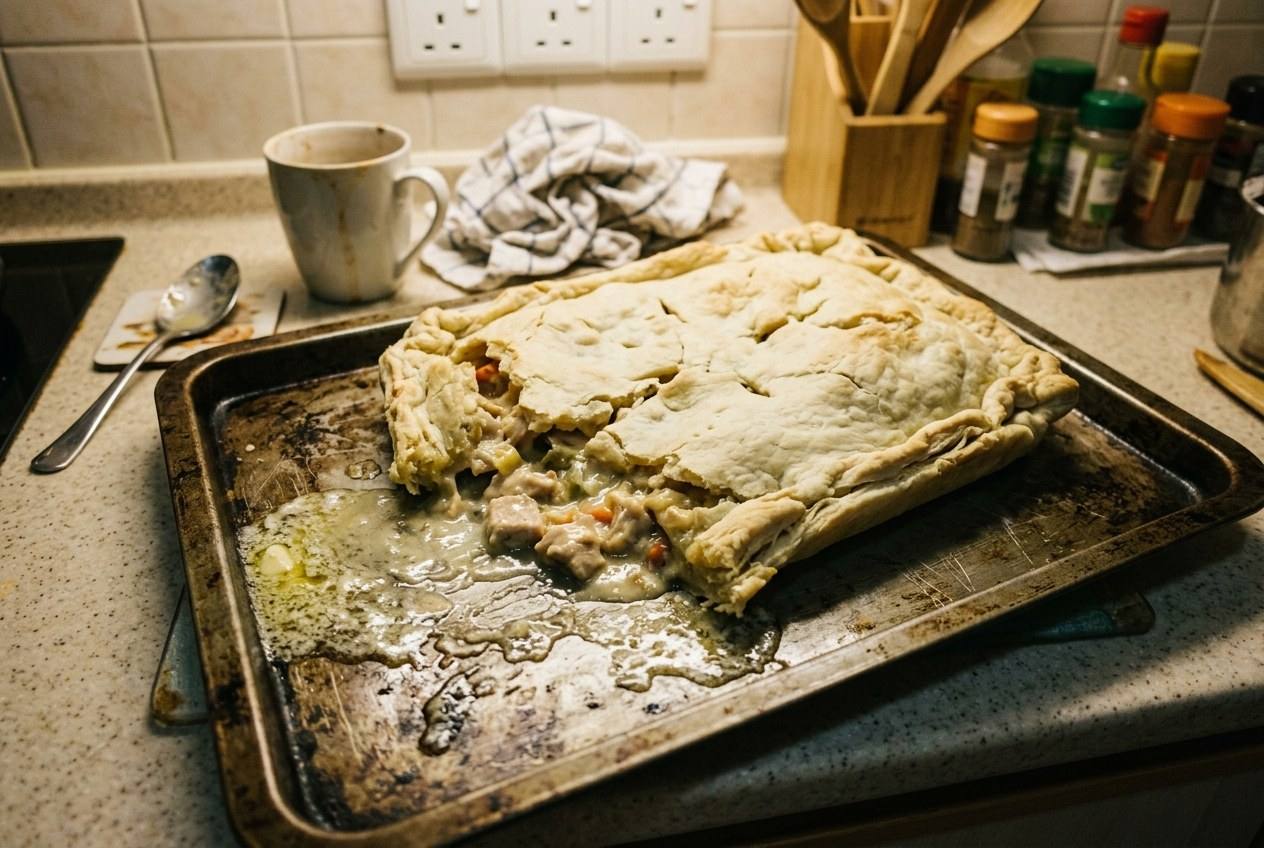
Reviewers used three helpful phrases. Leslie Tay described a homemade bechamel binding the chicken and vegetables (ieatishootipost, 2013). SETHLUI.com called it medium-thick (SETHLUI.com, 2020). And springtomorrow noticed that when the pie was cut, the filling flowed slowly (springtomorrow, 2014). Put together, that is a sauce thicker than a soup and looser than a croquette mix: it holds together on a fork but does not stand up on its own. Miss Tam Chiak’s tasters found it soaked into the inner layers of pastry (Miss Tam Chiak, 2019), which also tells you it was not stiff.
What is a bechamel, exactly?
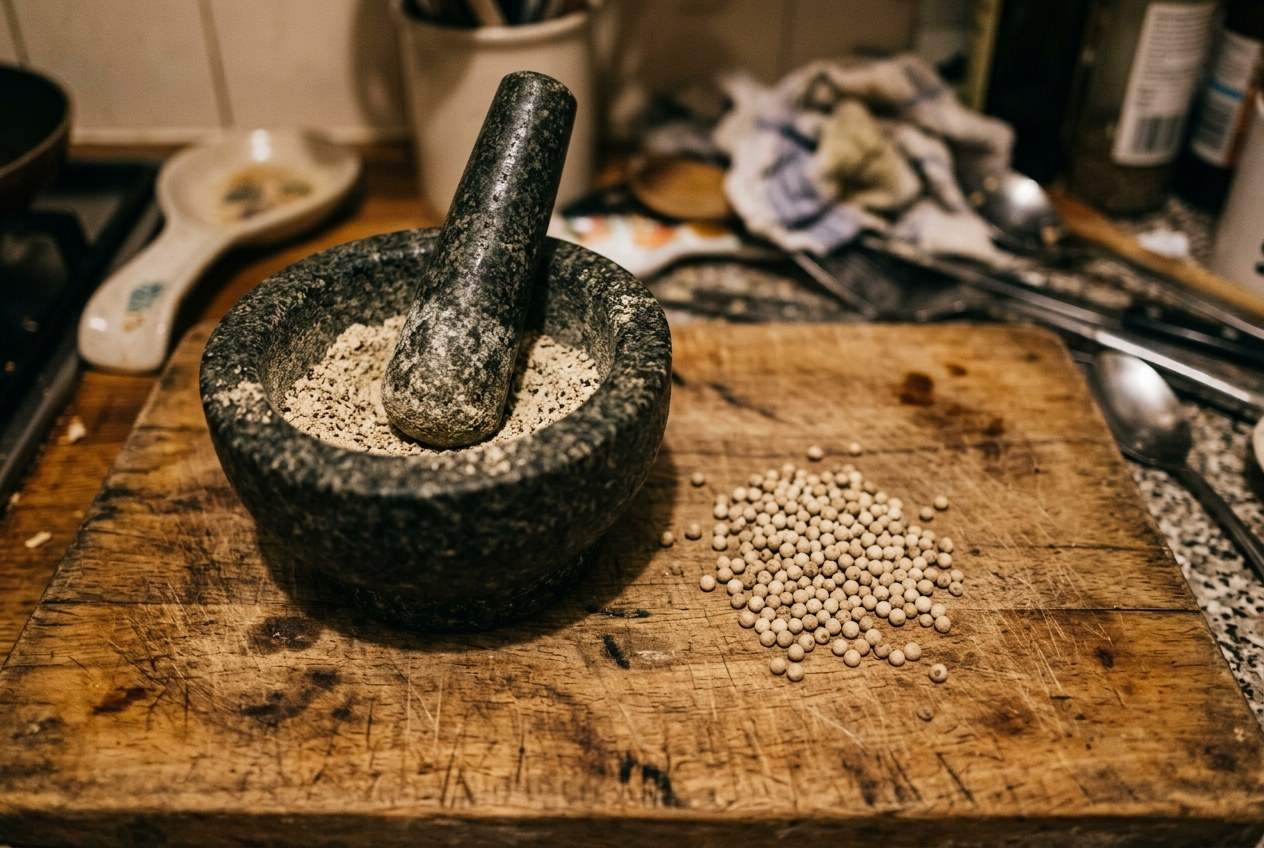
Bechamel is a white sauce made from three things: butter, flour and milk. You melt the butter, stir in the flour to make a roux (an international pie reference sums up what a roux is and why it thickens), cook it for a minute or two without letting it brown, and whisk in hot milk gradually. As it simmers, the starch in the flour swells and thickens the milk. Seasoning is classically salt and white pepper, sometimes nutmeg.
For a chicken pie, I replace part of the milk with the stock from poaching the chicken. Strictly, a roux thickened with stock is a velouté and one with milk is a bechamel; a mixture is somewhere between. Reviewers called Oven Marvel’s sauce bechamel, so I do too.
What ratio should I use?
These are the three consistencies I use, per 300 ml of liquid. They are standard kitchen proportions, rounded to friendly numbers.
| Thickness | Butter | Plain flour | Use |
|---|---|---|---|
| Thin, pouring | 18 g | 18 g | Soups, a sauce to pour over vegetables |
| Medium | 28 g | 28 g | Gratins, lasagne |
| Medium-thick, pie | 35 g | 35 g | Flat puff pastry pies |
| Very thick, binding | 45 g | 45 g | Croquettes, a filling that must hold a shape |
The pie row is where I have settled after several recreation attempts. With chicken, potato and peas folded through, it gives a filling that holds together when the pie is cut warm and oozes a little, slowly, which is what reviewers describe.
How do I test the thickness?
Use three checks, because each can fool you on its own.
- The spoon test. Dip a wooden spoon and lift it. The sauce should coat it thickly, like custard that has gone a little too far. Draw a finger across the back of the spoon: the line should stay clean.
- The cold plate test. Keep a saucer in the freezer. Drop a spoonful of sauce on it and wait one minute. The sauce thickens as it cools, and the cold spoonful shows you roughly what the filling will be like inside a pie that has rested for ten minutes.
- The simmer test. After the sauce thickens, keep it at a gentle bubble for at least two more minutes, stirring. Flour needs time at a simmer to thicken fully and lose its raw taste. A sauce that looks right after thirty seconds will often thin out later.
Why does thickness matter more under puff pastry?
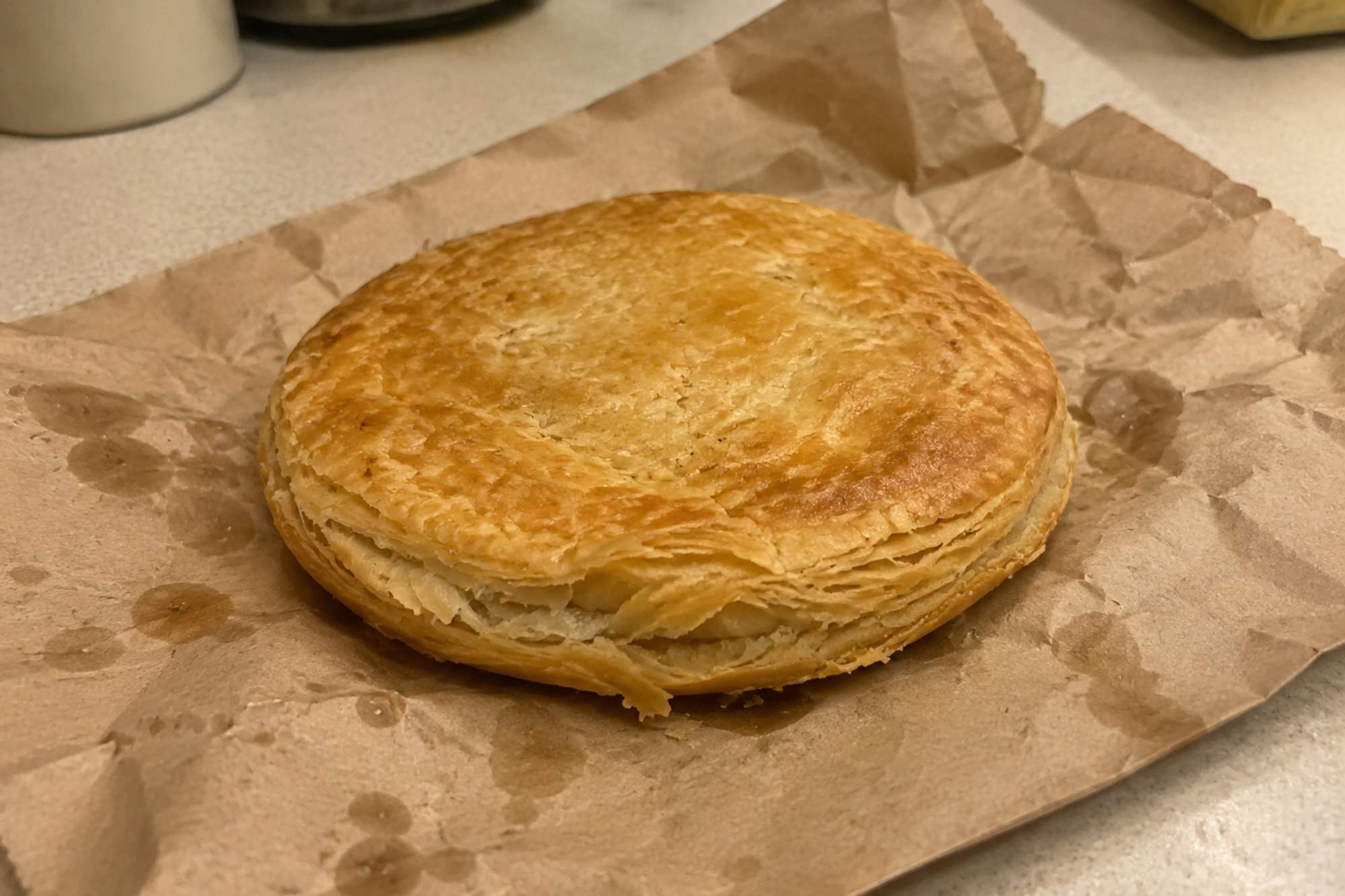
Because puff pastry has no defence against water. Shortcrust is dense and fatty enough to tolerate a wetter filling for a while. Puff pastry relies on separate layers of dough and butter; if a runny filling soaks the bottom sheet before it sets, those layers never lift. A slightly thicker sauce, fully cooled, protects the base while the oven does its work. The top layer, meanwhile, stays well away from the filling and puffs freely.
This is also why the soaked inner layer reviewers loved is a little bit of a balancing act: you want the sauce to soften the innermost layer of pastry, not drown the whole base.
How do I cool the filling safely?
Food safety and good pastry agree here. Cooked food should not linger in the temperature danger zone, roughly 5 C to 60 C, where bacteria multiply quickly (Singapore Food Agency). In a Singapore kitchen, food left on the counter stays in that zone for a long time. So:
- Spread the hot filling in a shallow tray so it cools fast.
- Press baking paper onto the surface to stop a skin forming.
- Once it stops steaming, usually within 20 to 30 minutes, refrigerate it. Do not leave it out for more than two hours in total.
- Use refrigerated filling within two to three days. General leftover guidance allows three to four days (USDA Food Safety and Inspection Service); I prefer a margin for something that will then be baked and possibly kept again.
Cold filling is also easier to portion. It holds a neat mound in the centre of each pastry circle instead of spreading to the edges where you need a clean seal.
What else affects the texture?
- Potato starch. Diced potato releases a little starch as it simmers, which thickens the filling further. If you add potato, aim for the lighter end of the ratio.
- Frozen peas. Add them straight from frozen at the end. They cool the mixture down and keep their colour.
- Chicken juices. Thigh meat releases liquid as it rests. Drain it into the sauce rather than letting it pool later.
- Salt timing. Season at the end, because the stock and the reduction concentrate salt.
The complete method, with weights that scale for any number of pies, is in the peppery chicken bechamel filling recipe. How much pepper goes into it, and when, is the subject of white pepper in chicken pie, and what a properly thick sauce does to the pastry is easiest to see in the butter puff chicken pie recipe. All four puff pastry pie technique guides are collected on one page.
Questions people ask
What is bechamel?
Bechamel is a white sauce made by cooking butter and flour together into a roux, then whisking in hot milk until it thickens. It is one of the classic French mother sauces and the base of many creamy pie fillings.
Why is my pie filling runny?
Usually the roux had too little flour for the amount of liquid, the sauce was not simmered long enough for the flour to thicken fully, or watery vegetables released liquid. Simmer the sauce for at least two minutes after it thickens, and cook vegetables before adding them.
Can I put warm filling into puff pastry?
No. Warm filling softens the butter layers before the pie reaches the oven, which makes the base soggy and the layers fuse. Cool the filling quickly in a shallow tray, refrigerate it, and assemble cold.
Sources for this page
- Oven Marvel: super duper addictive chicken pies
- Oven Marvel: chicken pies at Sunshine Plaza
- Oven Marvel, Sunshine Plaza: the best chicken pies in Singapore
- Best pies in Singapore: blind taste test
- Glossary A-Z on food safety
- Leftovers and food safety
Every source we used, with notes on what each one says: sources and further reading.
Keep reading