White pepper: the warmth in an old-school chicken pie
Nearly every review of Oven Marvel's chicken pie uses the word peppery. One says white peppery. This is a page about that one word.
Quick answer
Old-school Singapore chicken pies taste peppery because the creamy filling is seasoned generously with white pepper, which gives a warm, earthy heat that builds at the back of the throat. White pepper suits a pale bechamel because it is hotter and muskier than black pepper and leaves no dark specks. Add some early for depth and some at the end for aroma.
How peppery was the Oven Marvel pie?
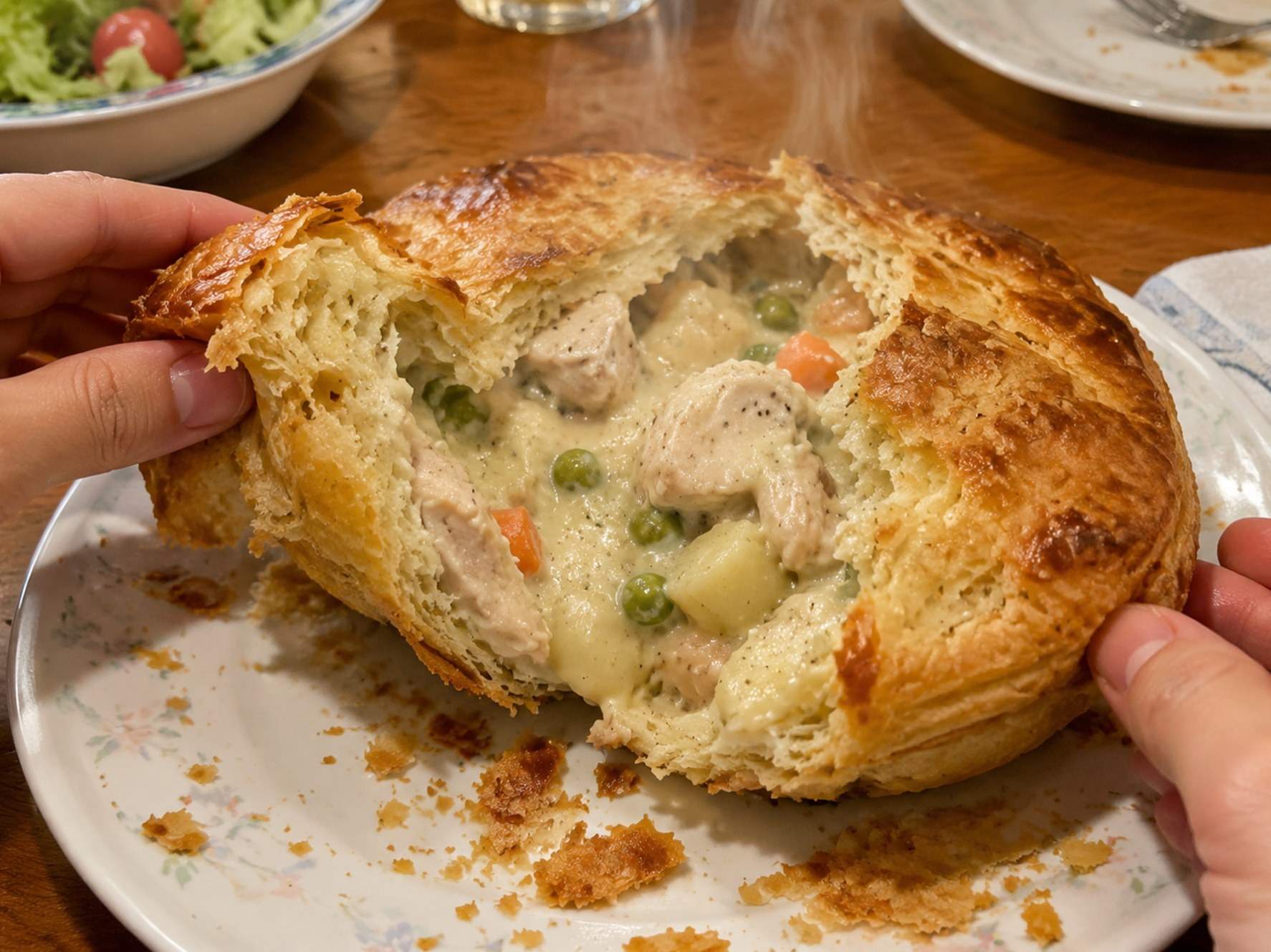
Peppery is the single most repeated word in the reviews. Leslie Tay called the filling peppery and creamy (ieatishootipost, 2013), and so did Miss Tam Chiak’s tasters (Miss Tam Chiak, 2019) and SETHLUI.com (SETHLUI.com, 2020). The most precise description comes from a 2017 Burpple reviewer who called it white peppery, and also a little sweet (Burpple). That pairing, warm pepper against sweet peas and gently cooked onion, is the flavour I keep coming back to. Pepper is not peculiar to Oven Marvel: old-school Singapore chicken pies in general lean on it, and originaldon.com’s note on pepper and seasoning shows how one maker of the egg-and-potato kind of pie thinks about it.
What is white pepper?
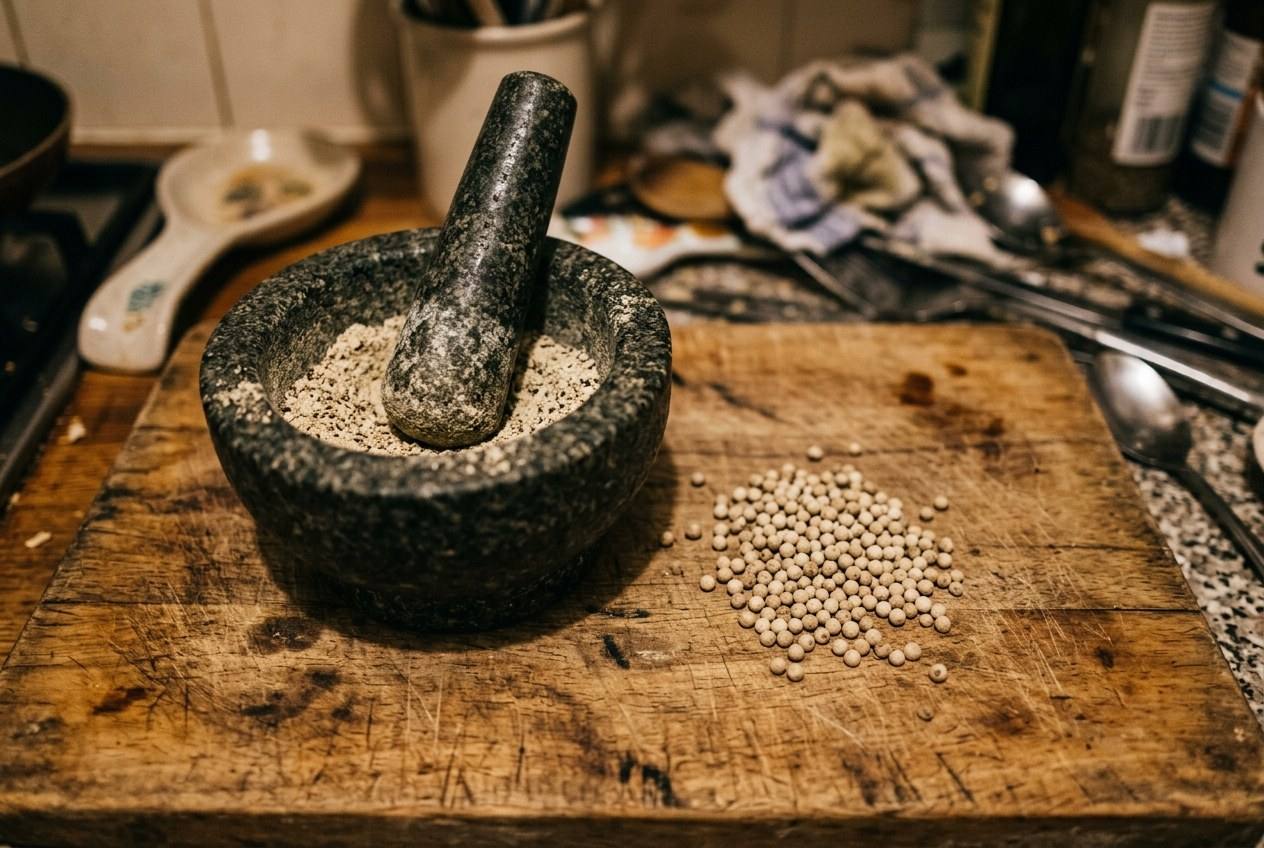
White pepper is the seed of the same berry that gives us black pepper, with the outer skin removed. Black pepper is picked slightly unripe and dried whole, skin and all, which is where its dark colour and bright, resinous aroma come from. For white pepper, riper berries are usually soaked until the skin softens, then rubbed clean and dried. What remains is a pale seed with a different personality: less bright, more earthy and musky, and with a heat that seems to arrive later and sit at the back of the throat.
Why does white pepper suit a creamy chicken filling?
Three reasons, in order of importance.
- The heat carries. Rich sauces dull flavours. A creamy, buttery filling inside buttery pastry needs something with enough edge to cut through, and white pepper’s late, lingering warmth does that without adding acidity.
- The aroma fits. White pepper’s muskiness sits comfortably alongside chicken, onion and milk. Black pepper’s brighter, almost citrusy notes can feel slightly out of place in a mild white sauce.
- It disappears visually. A pale bechamel stays pale. It is a small thing, but an old-school pie filling looks right when it is cream-coloured with green peas and orange carrot, not speckled.
White pepper is also a familiar seasoning across Singapore cooking, from the peppery pork rib soup of Teochew-style bak kut teh to everyday stir-fries and marinades. Leslie Tay pinned the pie’s distinctly Singaporean character on what he called a Hainanese touch (ieatishootipost, 2013). He did not specify what that was, so I will not pretend to know. But a confident hand with white pepper is the obvious candidate.
How much should I use?
Less than you think, then a bit more. Ground white pepper is strong, and its heat builds as the filling sits. My working amount for an Oven Marvel style filling:
| Level | Amount | What it tastes like |
|---|---|---|
| Gentle | 1 g (half a level teaspoon) | Warm, family-friendly, pepper in the background |
| Old-school | 2 g (one level teaspoon) | Clearly peppery, warmth that lingers; my recreation |
| Bold | 3 g (one and a half teaspoons) | Pepper is the headline; good with a cold drink |
These are my numbers from testing, not a measurement of anything the shop did. Weigh it if you can. Teaspoons of fine powder vary a lot.
When should I add it?
Split it. White pepper changes character the longer it cooks.
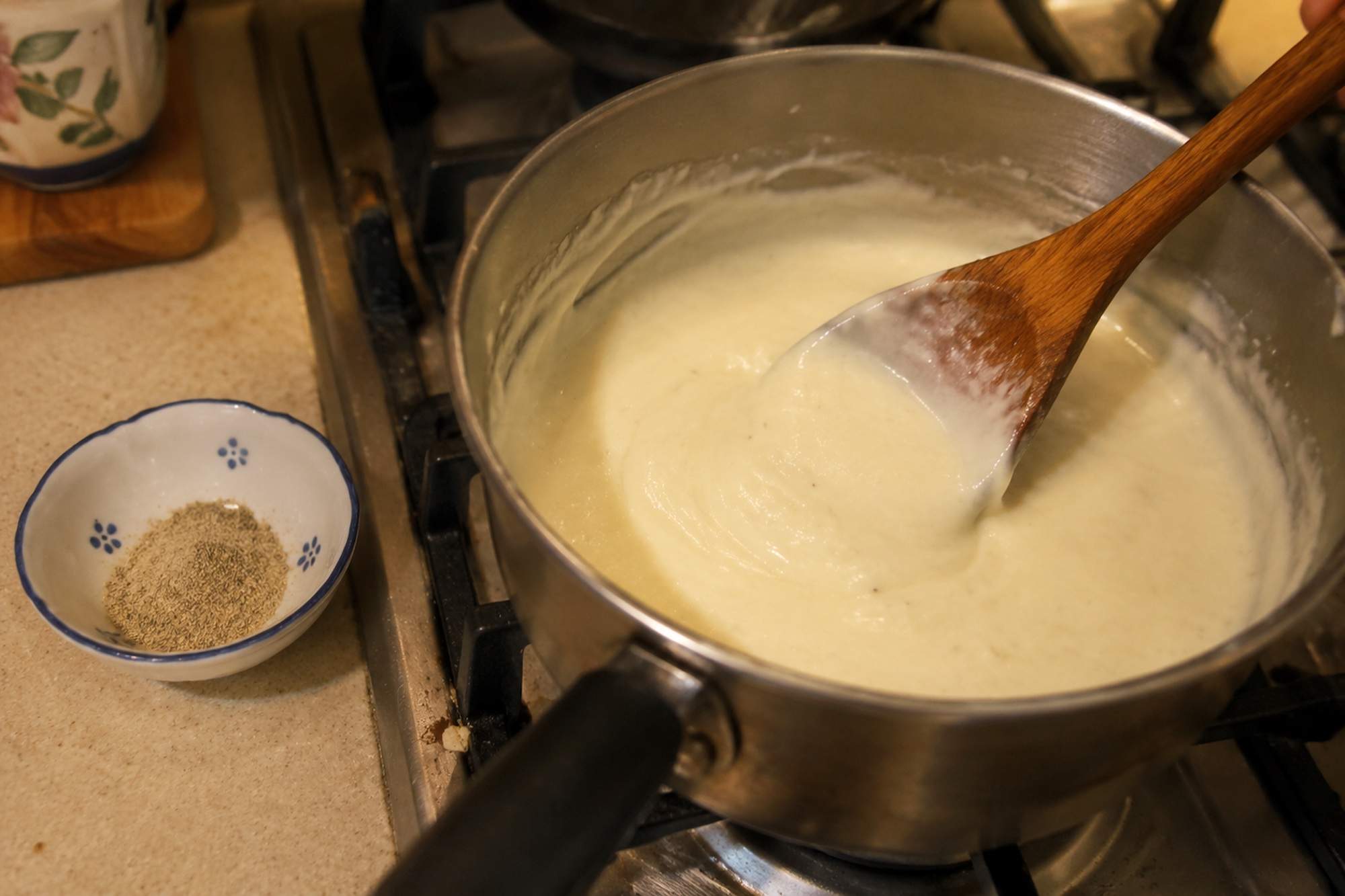
- Early, into the roux or the simmering sauce: about half. Long cooking mellows the aroma and spreads the heat through the sauce, giving depth.
- At the end, after the sauce comes off the heat: the other half. This keeps the sharper, more aromatic top notes that you smell when you break the pie open.
- Taste when cold. Pepper reads stronger in a cold filling than a hot one, and the filling goes into the pie cold. Adjust after chilling, not while it is steaming.
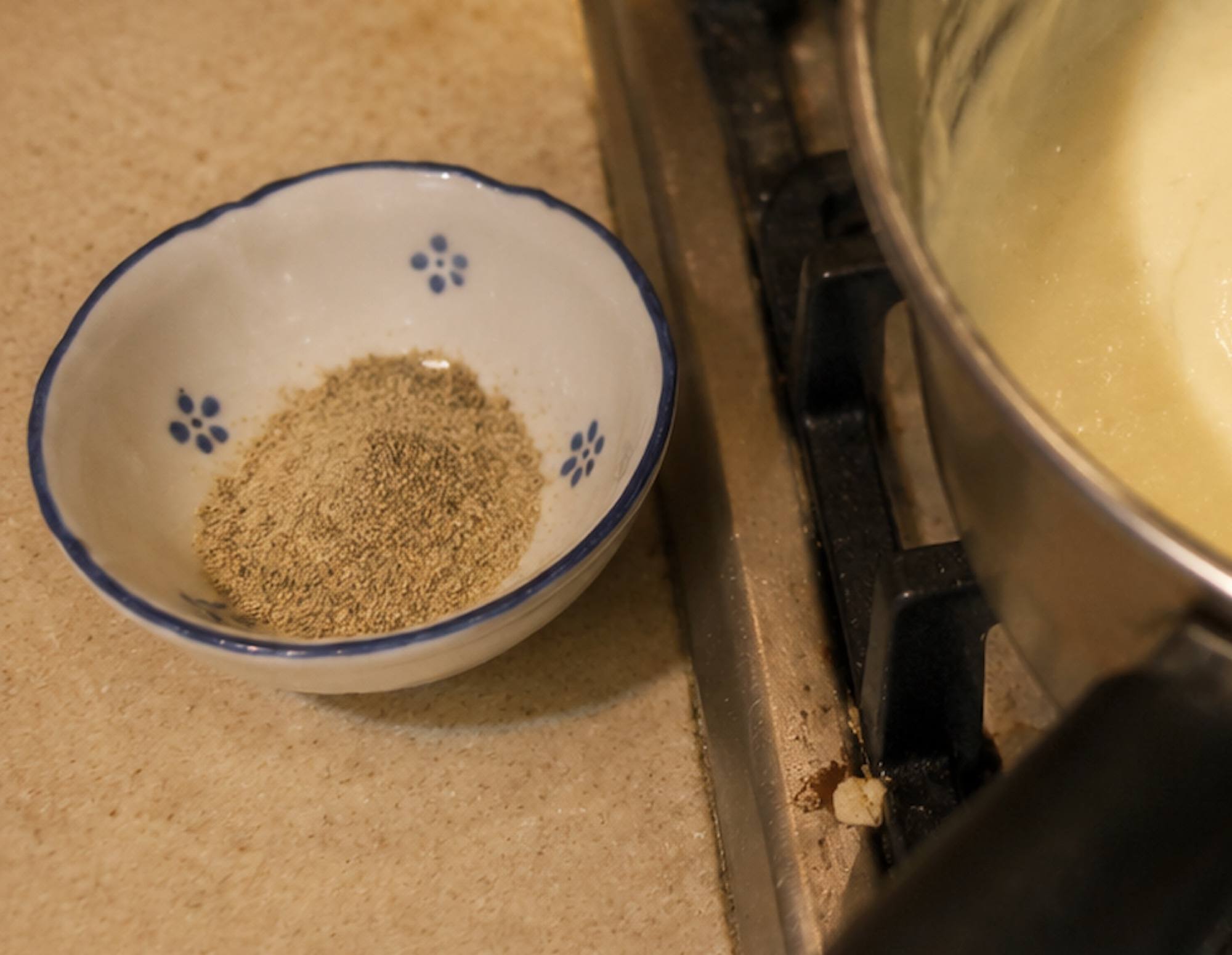
Should I grind it fresh?
If you can, yes. Pre-ground white pepper loses aroma quickly, and old jars can develop a musty smell that some people dislike in white pepper generally. Whole white peppercorns keep for a long time; grind them finely in a spice grinder or a mortar, because a coarse grind leaves gritty, fiery pieces in a smooth sauce. If you only have ground pepper, buy small jars and smell before you use it.
What if my pie tastes too peppery?
Do not add sugar. Add more of the dull things: a little extra milk-based sauce, more potato, or more peas. All three dilute the heat without making the filling taste “fixed”. If the pies are already baked, a cold drink helps. Leslie Tay liked his Oven Marvel pie with teh tarik (ieatishootipost, 2013), and I now understand the logic.
Where does this fit in the recipe?
The peppery chicken bechamel filling uses the old-school level, split in two, with a note on scaling. For how the sauce itself should behave, see bechamel thickness for pie filling. And for why the pepper alone is not enough, read what the Oven Marvel chicken pie tasted like: the butter is doing just as much work. This guide is one of four chicken pie technique guides on this site.
Questions people ask
What is the difference between white and black pepper?
Both come from the same plant. Black pepper is the whole dried berry, skin and all. White pepper is the seed with the outer skin removed, usually after soaking. Without the skin, white pepper loses some of the bright, piney aroma of black pepper and gains a muskier, earthier character and a sharper heat.
How much white pepper should go in a chicken pie filling?
For a peppery, old-school filling, I use about 2 g, roughly a level teaspoon, of finely ground white pepper per 1 kg of finished filling, half added during cooking and half at the end. Start with less if you are unsure; you can always add more.
Can I use black pepper instead?
You can, and it will be good, but it will taste different: brighter, less warming, and with visible dark specks in the pale sauce. For an Oven Marvel style pie, white pepper is the better match to what reviewers described.
Sources for this page
- Oven Marvel: super duper addictive chicken pies
- Oven Marvel at Sunshine Plaza: reviews
- Best pies in Singapore: blind taste test
- Oven Marvel: chicken pies at Sunshine Plaza
Every source we used, with notes on what each one says: sources and further reading.
Keep reading